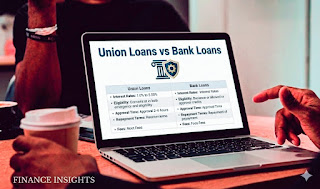
Union loan and bank loan, which is better? Here are the answers per each condition
Many people often assume that loans from union mutual funds are automatically cheaper and more convenient than loans from commercial banks. It is for this reason we compare union loan and bank loans.
The argument usually centres on lower interest rates, absence of processing charges, and the belief that union loans are designed mainly to support teachers financially.
At first glance, this perception appears valid. Some teacher unions, including the Ghana National Association of Teachers, currently offer loan facilities at interest rates around 14% per annum, while some commercial banks such as GCB Bank may charge rates exceeding 20% depending on the type of facility and the borrower’s profile.
However, a closer assessment of the full borrowing structure reveals that the actual cost of union loans may not always be significantly lower than many teachers believe.
Understanding the Conditions Attached to Union Loans
Before a teacher becomes eligible for a union-backed loan, several financial conditions must first be satisfied.
In most cases, the applicant must first become an active union member and consistently pay monthly dues over a specified period, often six months or more. Apart from the union dues, the teacher is also required to contribute monthly to the union’s mutual fund scheme before qualifying for any loan support.
For many unions, these monthly contributions can be substantial. In addition, borrowers are usually expected to maintain a percentage of the intended loan amount as savings within the fund before approval is granted.
For example, a teacher applying for a GH₵20,000 facility may be required to already have GH₵2,000 saved in the contribution account. A larger loan naturally demands a higher contribution balance.
In some situations, teachers seeking bigger loan amounts are compelled to increase their monthly contributions before the facility can be approved.
Although these contributions technically remain the property of the contributor, they still place financial pressure on the teacher because the monthly deductions reduce affordability and affect take-home income.
Another major limitation is accessibility. During the repayment period, contributors are often unable to withdraw their savings freely to respond to emergencies or urgent financial needs.
How Bank Loans Differ
Commercial banks generally operate under a different arrangement.
For salary workers whose earnings pass through the bank, loan qualification may not require compulsory union dues or long-term contribution commitments before access is granted.
Additionally, customers can often maintain personal savings independently and withdraw funds whenever emergencies arise. Depending on affordability levels, some banks may also extend additional loan facilities when unexpected financial needs occur.
These practical differences are sometimes overlooked when teachers compare only the interest rates between union loans and bank loans.

A Practical Loan Example
A recent loan statement from a teachers’ fund provides a useful example of how the actual borrowing cost can increase beyond the advertised interest rate.
According to the statement, a teacher secured a GH₵43,300 loan over a five-year repayment period at an annual interest rate of 14%.
The expected monthly repayment under the standard loan calculation formula should be approximately GH₵1,008.
However, the actual monthly deduction reflected in the statement stood at GH₵1,067.77.
The reason for the difference was an additional fee of GH₵2,598, representing 6% of the principal amount.
This means the borrower’s real financial obligation became:
▪ Principal Amount: GH₵43,300
▪ Additional Charge: GH₵2,598
▪ Total Loan Obligation: GH₵45,898
Once this additional amount was added, the monthly repayment increased accordingly.
This raises an important question many teachers rarely examine carefully: if an extra percentage charge is added to the loan amount, can it truly be argued that there are no processing or administrative fees attached?
The Need for Careful Financial Assessment
The purpose of this discussion is not to discourage teachers from using union financial services. Many teachers have genuinely benefited from these schemes over the years, and the support systems provided by teacher unions continue to play an important role in members’ welfare.
However, borrowing decisions should not be based solely on advertised interest rates.
Before taking any facility, teachers should critically examine:
▪ the stated interest rate;
▪ additional charges attached to the loan;
▪ compulsory dues and contribution requirements;
▪ the effect of monthly deductions on affordability;
▪ and whether personal savings remain accessible during emergencies.
When all these factors are carefully assessed together, the true cost of borrowing becomes much clearer.
When all these factors are carefully assessed together, the true cost of borrowing becomes much clearer.
In many situations, teachers may realise that the overall difference between union loans and bank loans is far smaller than it initially appears.